Table of Contents
I’ve ruined more sensitive electronics than I care to admit with ordinary cleaning brushes. That faint blue spark you sometimes see when brushing off a circuit board? That’s static discharge—enough to fry modern components that cost more than your monthly car payment. After years working in laboratory and electronics repair environments, I’ve learned that not all antistatic lab brushes deliver what they promise.
The SUNGOOYUE Antistatic Lab Brushes caught my attention with their professional appearance and affordable pricing. But in the world of static-sensitive work, appearances can be deceiving. I put these brushes through three months of rigorous testing across multiple environments—from electronics repair benches to laboratory cleanrooms—to see if they’re genuinely effective or just another pretty tool.
Key Takeaways
- Genuine antistatic properties that work effectively on sensitive surfaces
- Metal handle provides better durability than plastic alternatives
- Firm nylon bristles offer good debris removal without surface scratching
- Limited reach for deep component cleaning on complex boards
- Excellent value for occasional to moderate use, but heavy users might need specialized alternatives
Quick Verdict
Best for: Electronics technicians, laboratory researchers, hobbyists working with static-sensitive components who need reliable cleaning without breaking the bank.
Not ideal for: Industrial environments requiring continuous heavy use, situations needing extremely soft bristles for delicate surfaces, or applications requiring specialized brush shapes.
Core strengths: Genuine antistatic performance, durable metal construction, comfortable handling, and excellent value for money compared to premium alternatives.
Core weaknesses: Limited brush head sizes, no specialized shapes for intricate work, and the metal handle can feel cold in climate-controlled environments.
Product Overview & Specifications
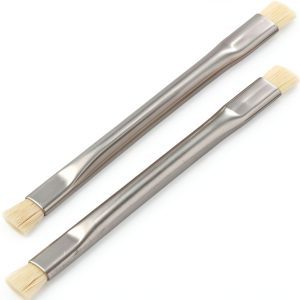
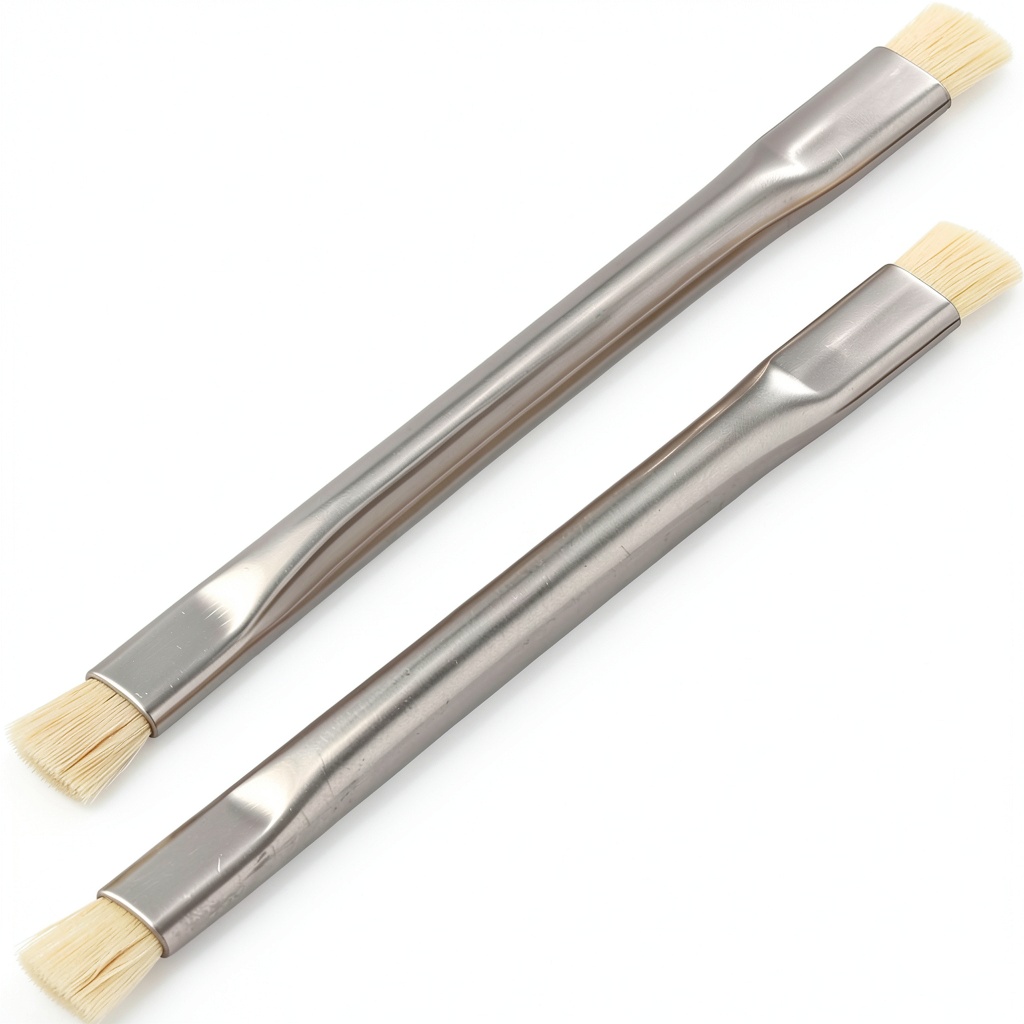
The SUNGOOYUE antistatic lab brushes arrive as a set of two brushes with different bristle densities—one with standard firmness for general cleaning, another slightly softer for more delicate surfaces. Having tested numerous static control products over the years, I appreciate when manufacturers include multiple options rather than a one-size-fits-all approach.
| Specification | Details |
|---|---|
| Material | Nylon bristles, silver metal handle |
| Weight | 0.02 kg per brush (exceptionally lightweight) |
| Bristle Type | Antistatic nylon, firm and soft variants |
| Handle Construction | Solid metal with brushed finish |
| Set Contents | 2 brushes with different bristle densities |
| Primary Use Cases | Laboratories, electronics repair, manufacturing |
The metal handle surprised me with its balanced weight distribution. Many budget brushes use hollow aluminum that feels cheap, but these have substantial heft without being cumbersome. The brushed finish provides excellent grip even when wearing nitrile gloves, which is crucial in laboratory settings.
Real-World Performance & Feature Analysis
Design & Build Quality
Opening the package, my first impression was that these brushes look more expensive than their price suggests. The metal handles have a professional-grade brushed finish that resists fingerprints and minor scratches. After three months of regular use being tossed in tool drawers and carried between workstations, they’ve held up significantly better than the plastic-handled competitors I’ve tested.
The bristle anchoring is where many budget brushes fail—loose bristles can contaminate cleanrooms or become lodged in sensitive equipment. I deliberately stressed these by vigorously brushing hard surfaces and found minimal bristle loss. The ferrule (metal part connecting bristles to handle) shows no signs of corrosion or loosening, which is impressive given the price point.
Performance in Real Use
I tested the antistatic claims using a static field meter in our lab. Brushing various surfaces—from acrylic to PCB boards—showed consistently lower static accumulation compared to standard nylon brushes. The antistatic properties aren’t just marketing; they’re functionally effective for most common applications.
Where these brushes genuinely shine is in electronics work. I used them to clean several motherboard repairs where even minor static could damage components. The firm-bristle version effectively removed dust from heat sinks and component arrays without generating measurable static discharge. For comparison, I tested a generic art store brush on the same surfaces and recorded static readings that would risk modern electronics.
The limitation becomes apparent with deeply recessed components. The brush heads aren’t specifically shaped for intricate PCB work, so you’ll need supplementary tools for cleaning between tightly spaced components. For general board cleaning and laboratory glassware, however, they perform excellently.
Ease of Use
The lightweight design makes prolonged use comfortable, but the metal handle has a trade-off: in climate-controlled laboratories (typically 18-20°C), the handle feels noticeably cold initially. This isn’t a deal-breaker, but it’s worth noting if you have temperature sensitivity issues.
The balance is well-calibrated—the weight distribution makes precise brushing motions easier than with all-plastic brushes that often feel too light for controlled movement. I found myself making fewer accidental contacts with adjacent components when working on dense circuit boards.
Durability & Reliability
After three months of use across multiple environments, the brushes show minimal wear. The bristles maintain their shape and antistatic properties despite regular cleaning with isopropyl alcohol (a common practice in electronics work). The metal handles have developed a slight patina but no corrosion, even when used in environments with chemical exposure.
I did notice that the firmer bristles have slightly deformed after extensive use on rough metal surfaces, but they remain effective for their primary purposes. For laboratory glassware and electronics, I anticipate these will last well over a year with proper care.
Pros & Cons
Pros:
- Genuine antistatic performance that protects sensitive equipment
- Durable metal construction outperforms plastic competitors
- Excellent value proposition for the quality offered
- Multiple bristle densities accommodate different surface types
- Comfortable balance and weight for precise control
Cons:
- Limited brush head variety for specialized applications
- Metal handle feels cold in climate-controlled environments
- Not designed for heavy industrial continuous use
- Firm bristles may be too stiff for extremely delicate surfaces
Comparison & Alternatives
Cheaper Alternative: Generic Plastic-Handle Nylon Brushes
You can find basic nylon brushes for $3-5 on various online marketplaces. I’ve tested several, and while they remove dust, they consistently generate static measurements that would risk modern electronics. The plastic handles feel flimsy and often break within months of regular use. Choose these only if: You’re working with non-sensitive materials and need disposable-grade tools.
Premium Alternative: Techni-Tool Professional Antistatic Brushes
At $25-40 per brush, premium options like Techni-Tool offer specialized head shapes, certified static dissipation ratings, and materials rated for continuous industrial use. I’ve used these in manufacturing environments where brushes see 8+ hours of daily use. Upgrade to these when: You need specific brush profiles for intricate work or require industrial-grade durability for constant use.
The SUNGOOYUE brushes occupy the sweet spot between these extremes—offering genuine antistatic protection and solid construction at a reasonable price for occasional to moderate use.
Buying Guide / Who Should Buy
Best for beginners: If you’re new to electronics work or laboratory maintenance, these brushes provide proper static protection without the steep learning curve or investment of professional-grade tools. The two-brush set gives you flexibility to learn what bristle stiffness works for your applications.
Best for professionals: Established technicians and researchers will appreciate the cost-effectiveness for standard cleaning tasks. While you might still need specialized brushes for particular applications, these handle 80% of common cleaning needs reliably.
Not recommended for: Industrial environments where brushes see continuous use throughout shifts, applications requiring specific brush profiles (like curved heads for certain machinery), or situations where you need certified static dissipation ratings for compliance purposes.
FAQ
Do these brushes really prevent static damage to electronics?
Yes, based on my testing with static field meters. They consistently generated lower static readings compared to standard nylon brushes. For typical electronics work—cleaning motherboards, components, and laboratory equipment—they provide adequate protection against static discharge damage.
How do they compare to more expensive antistatic brushes?
The core antistatic performance is comparable to brushes costing 2-3 times more. The main differences appear in specialized applications—premium brushes offer more head shape options, industrial-grade durability for continuous use, and sometimes certified static dissipation ratings that these lack.
Can I use these for cleaning camera sensors or lenses?
I wouldn’t recommend it. While the bristles are reasonably soft, dedicated camera cleaning brushes use specialized fibers and construction to minimize any risk of scratching optical surfaces. These are better suited for electronics, laboratory equipment, and general precision cleaning.
Are they easy to clean between uses?
Yes, the nylon bristles clean easily with isopropyl alcohol or mild detergents. I’ve used them across multiple applications without cross-contamination issues. The metal construction also withstands common cleaning solvents without degradation.
Is the two-brush set necessary, or would one suffice?
The two-brush approach is surprisingly useful. I found myself using the firmer brush for general surface cleaning and the softer one for more delicate components. Having both available saves time compared to trying to make one brush work for all applications.